GEO marketing is a set of activities aimed at increasing brand visibility in the responses generated by systems such as ChatGPT, Perplexity, Gemini, and Google AI Overview. The goal is for AI to mention your company when a customer asks about your product. This approach takes promotion beyond traditional search engine optimization, creating an additional channel for attracting potential customers. In this article, we will explore how the customer journey is changing, what role a GEO specialist plays, and how to conduct an initial visibility audit.
In short:
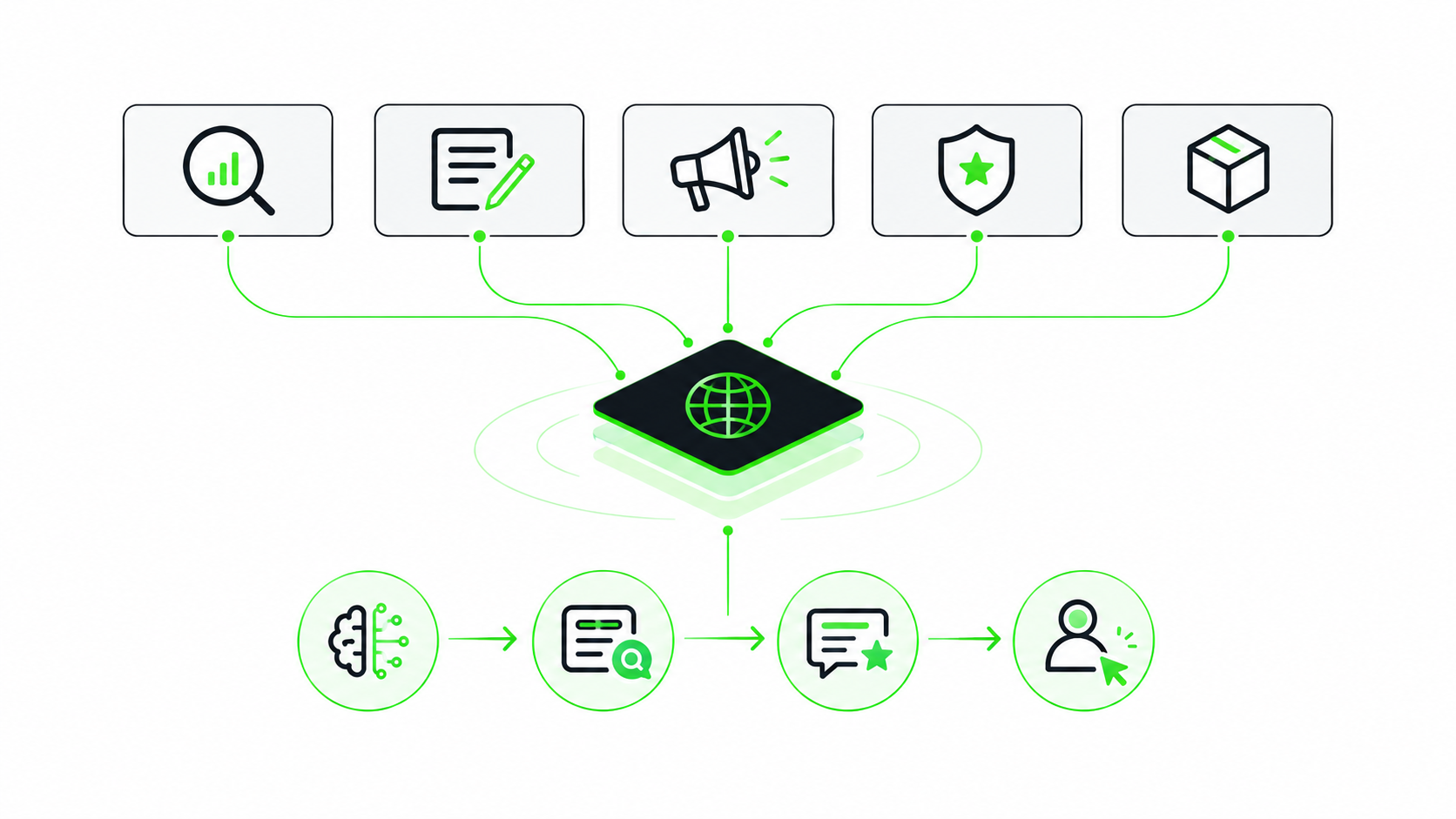
➤ The Essence of the Approach: shifting from promoting individual pages to systematically managing brand visibility, mentions, and sources of information about the brand. ➤ The Shift in the Funnel: customers receive recommendations and compare solutions directly within chatbot interfaces, partially reducing the number of clicks from traditional search results. ➤ Channel Synergy: GEO marketing operates at the intersection of traditional SEO, content marketing, PR activities, and reputation management. ➤ The Role of a Specialist: a GEO specialist develops strategies for working with prompts, AI visibility, and unlinked brand mentions. ➤ Getting Started: full-scale implementation always begins with a GEO audit — an assessment of the company's current presence in AI-generated responses.
Comprehensive GEO optimization transforms the way a company manages its digital presence, turning language-model responses into a predictable source of leads. Systematic visibility measurement, content adaptation for RAG algorithms, and management of the non-linked reputation landscape allow a brand to establish itself in AI recommendations and maintain its market share as user demand shifts.
GEO in Marketing: What Does the Term Mean?
GEO in marketing (Generative Engine Optimization) is a comprehensive strategy for adapting a company's digital presence to generative search algorithms. The term refers to working with RAG algorithms and language models, with AEO (Answer Engine Optimization), LLMO, and AI SEO being its closest synonyms.
The use of the GEO abbreviation in the context of marketing strategies has nothing to do with geotargeting, regional promotion, or choosing physical locations for sales outlets. This is a common source of confusion because the letters are the same. To learn more about the differences between page ranking and answer generation, read our material on how GEO differs from SEO.
How GEO Search Is Changing the Customer Journey
GEO search creates a fundamentally new entry point into the sales funnel, where the decision to choose a brand can be made before the first visit to a website. The user enters a detailed prompt and receives a ready-made summary with several options, significantly reducing the time spent searching independently.
Previously, a customer followed the traditional path: entering a short keyword, analyzing search results, visiting 3–5 websites, and manually comparing terms and conditions. Now, a generative response provides a prepared selection of solutions, and the user visits a website with a specific brand intent.
In some scenarios, the path to choosing a solution may become shorter, but the initial selection stage also becomes less transparent to analytics systems. If a brand is not mentioned in an AI response, it may never come to the user's attention during the initial selection stage.
At the same time, external brand mentions on third-party resources, expert columns, and industry directories are becoming more valuable. A model collects information from multiple sources, so the reputation landscape, reviews, and other external sources may influence how a generative system describes a brand and its products.
| Funnel Stage | Traditional Search | GEO Search |
| Awareness | Ads and links displayed in SERPs | Brand mention in an AI-generated response |
| Consideration | Comparing pages across 3–5 different websites | Reviewing a ready-made table or list directly in the chat |
| Choice | Clicking an ad or organic result | Branded search or direct click on a citation |
| Analytics | The entire click journey is recorded in GA4 | The GA4 session often starts directly with a branded visit |
The Role of GEO in Marketing Strategy
GEO is not an isolated channel but an additional optimization layer that integrates into an existing marketing strategy and enhances the performance of familiar tools.
➤ SEO. Basic SEO promotion ensures the technical health of the website and high indexation, allowing RAG systems to quickly find the original source. ➤ Content Marketing. Systematic content marketing provides structured expert articles, tables, and answers to frequently asked questions that AI models can easily cite. ➤ PR and Publications. Expert columns and press releases in independent media create a consistent semantic footprint that confirms the company's authority for language models. ➤ Online Reputation Management (ORM). Brand protection and systematic review management shape the brand's external information environment. ➤ Product Marketing. Clear specifications, transparent pricing, and detailed comparisons provide models with accurate data for recommendations.
Adapting processes to generative search does not require increasing the budget from scratch. Approximately 60–70% of the necessary tasks can be covered by adapting existing briefs for SEO, PR, and content teams.
GEO Specialist: Who Is It and What Should They Know?
A GEO specialist is an expert responsible for brand visibility, citability, and positioning within generative search systems and chatbots. They combine search analytics skills with expertise in structured data and management of the company's external reputation landscape.
| Skill | SEO Specialist | GEO Specialist |
| Semantics | Collecting keyword queries | Analyzing prompts and complex user questions |
| Analytics | SERP positions, organic traffic | AI visibility, Share of Voice |
| Content briefs | Content optimized for target keywords | Structuring content fragments for RAG citation |
| Technical | SEO Speed, Core Web Vitals, indexing | Configuring robots.txt for AI bots, Schema.org, llms.txt |
| External signals | Building backlinks | Working with non-linked brand mentions |
| Tools | Ahrefs, Serpstat, Google Search Console | AI trackers, manual prompt testing in LLMs |
At present, the profession is developing primarily from experienced SEO specialists and product marketers who have mastered RAG algorithms and the specifics of working with LLMs. If you want to explore the technical side of the subject in detail, we recommend our guide on how to get into AI-generated answers.
When choosing between hiring an in-house employee and working with an agency, access to analytics becomes a key factor. Agencies can compare data across dozens of projects from different industries, which helps compensate for the lack of publicly available benchmarks.
GEO Audit: Where the Work Begins
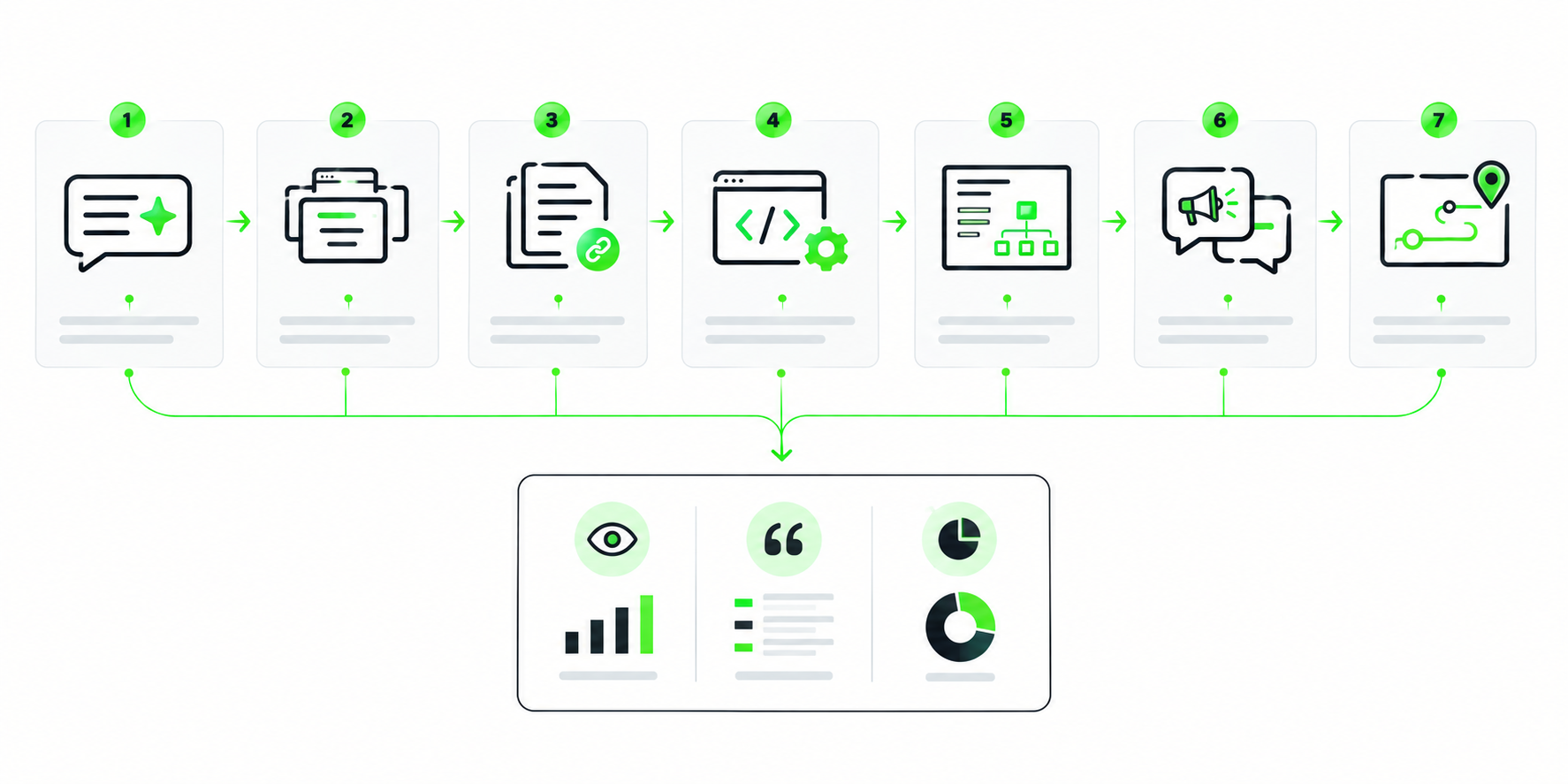
A GEO audit is an initial study of a company's digital presence that makes it possible to assess the current AI visibility of the brand and create a step-by-step optimization plan. Without establishing a baseline, it is impossible to objectively track changes over time.
➤ AI Visibility Measurement: checking the company's presence across 20–30 key prompts in ChatGPT, Perplexity, Gemini, and Google AI Overview. ➤ Competitor Analysis: identifying the brands that AI models most frequently feature in recommendation sections for your industry. ➤ Cited Source Analysis: identifying third-party platforms from which RAG algorithms most frequently retrieve factual information in your niche. ➤ Technical Website Audit: checking the correctness of the robots.txt file, code accessibility for AI bots, and Schema.org structured data. ➤ Content Structure Audit: evaluating the homepage and service pages for the presence of direct answers and easy-to-read tables. ➤ External Mention Audit: analyzing the presence of company publications and mentions on independent websites, in directories, and on review platforms.
Based on the audit results, a detailed prompt matrix, a prioritized list of technical fixes, and a roadmap for further optimization over 3–6 months are developed.
How to Measure GEO in Marketing
The results of generative promotion are evaluated by tracking the dynamics of textual mentions and analyzing referral traffic from AI sources.
➤ Prompt Presence Rate: the share of target queries in which your brand appears in the responses. ➤ Position in the List: the company's position in the chatbot's list of recommendations (mentioned first or last). ➤ Number of Cited URLs: the number of pages on your website to which the AI model provides direct links as sources. ➤ Share of Voice: the volume of mentions of your brand compared to competitors in AI-generated responses. ➤ Referral Traffic in GA4: visits from the domains chatgpt.com, perplexity.ai, gemini.google.com, and claude.ai. ➤ Growth in Branded Search Demand: an increase in the number of direct Google search queries containing your company name.
Language-model responses may differ from one session to another. To obtain reliable data, measurements should be taken in a series of 2–3 checks and compared month over month.
FAQ
How Is GEO Marketing Different from Geomarketing?
Geomarketing is a discipline focused on analyzing locations and opening physical sales outlets based on geographic data. GEO marketing (Generative Engine Optimization) is the promotion of a brand in responses generated by artificial intelligence systems.
Do You Need a Separate GEO Specialist, or Can the SEO Team Handle It?
At the initial stages, the existing SEO team can handle these tasks, provided that its expertise is expanded to include structured data, RAG content structuring, and work with AI crawlers.
What Does a GEO Audit Include and How Long Does It Take?
An audit includes checking AI visibility across prompts, conducting a technical website assessment, analyzing source websites and external brand mentions. The timeframe depends on the size of the website, the number of prompts, and the depth of the audit.
What Budget Should You Allocate to GEO Marketing?
In most cases, there is no need to allocate a separate large budget. The tasks can be handled by reallocating resources within existing SEO, PR, and content marketing activities.
Does GEO Work for B2B?
Yes. GEO can be particularly useful in B2B, where users rely on generative systems to research the market and find suppliers.