Website promotion in AI platforms involves comprehensive efforts to get ChatGPT, Perplexity, Gemini, and Google's AI Overview to mention your brand in responses to users and cite your website as an information source. The emergence of generative search has created a new marketing channel whose effectiveness can be measured and analyzed. In this practical guide, we will explore how generative models select sources, how to configure a website technically, and how to develop a content strategy to get featured in AI-generated answers.
In short:
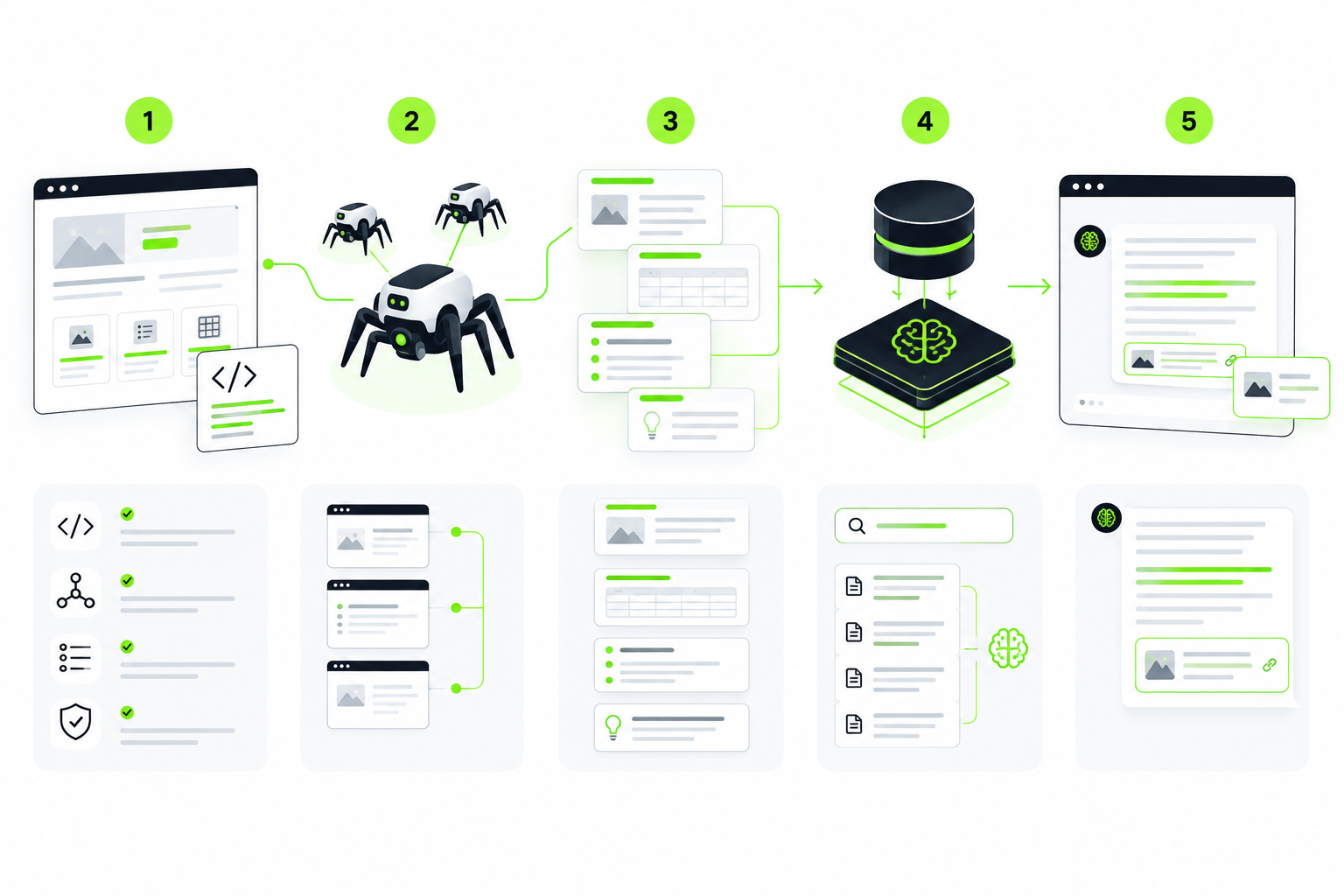
➤ Core principle: AI promotion requires optimizing your digital presence for information retrieval algorithms (RAG) and large language models (LLMs). ➤ Technical requirements: allowing AI crawlers in robots.txt, implementing proper Schema.org markup, ensuring fast loading, and maintaining clean HTML code. ➤ Content format: applying the principle of “chunking,” which involves providing a short, direct answer to the user's question at the beginning of each section. ➤ Off-site optimization: building unlinked brand mentions on authoritative industry platforms, in the media, and on aggregator websites. ➤ Analytics: tracking brand presence across a grid of target prompts and monitoring AI referral traffic in Google Analytics 4.
Systematically implementing these five steps can turn AI systems into a stable channel for attracting targeted traffic and leads.
AI Search Promotion and AI-Assisted Promotion Are Two Different Things
Website promotion in AI search is aimed at attracting a target audience through chatbot responses and generative search-result blocks, while using AI as a tool simply speeds up internal marketing processes.
| Parameter | AI Search Promotion (GEO) | AI-Assisted Promotion |
| Main goal | Get the brand into generative system responses | Speed up workflows and routine tasks |
| Tools | AI website optimization, structured data, external mentions | Text generation, automated analytics, AI-generated visuals |
| Result | A new source of referral and branded traffic | Reduced workload and time savings |
In this article, we will focus specifically on the first direction — GEO website promotion in AI-generated responses.
GEO and AI: What Lies Behind the Combination of Terms
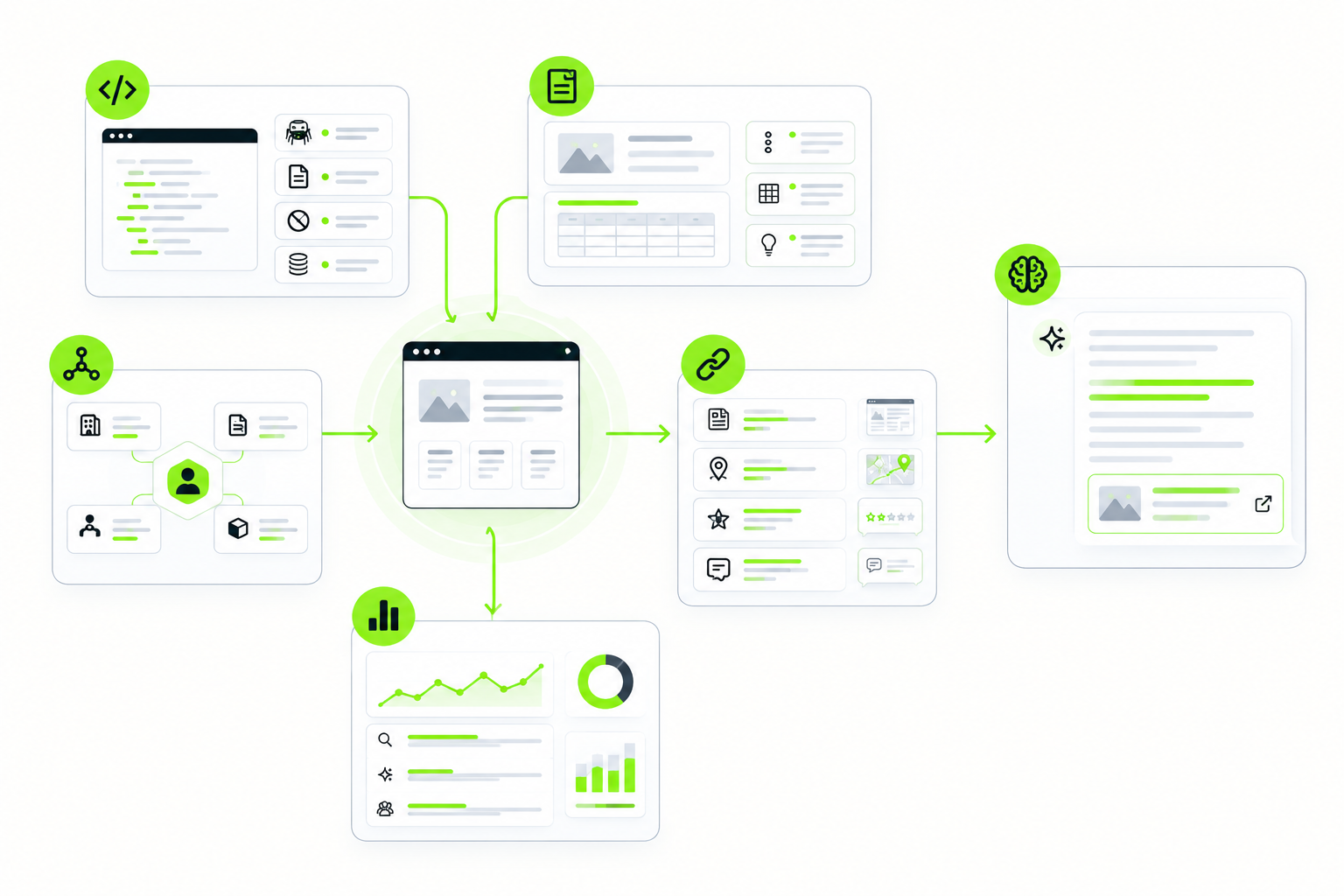
The abbreviation GEO (Generative Engine Optimization) refers to optimization for generative search engines, while AI is the underlying technology behind their operation. Together, these terms describe the process of adapting digital content to the way RAG (Retrieval-Augmented Generation) systems work. To better understand the fundamental differences from traditional search engine optimization, read our material on how GEO differs from SEO.
How AI Systems Choose Which Sources to Mention
Generative systems do not use the traditional website-ranking model in exactly the same way as conventional search engines. They analyze the search query (prompt) and retrieve data from available web sources through search and retrieval mechanisms.
ChatGPT
The service uses its own OAI-SearchBot and GPTBot crawlers to index the web and build training datasets. When answering a commercial prompt, the system relies both on its stored knowledge base and on real-time search, taking into account the authority and relevance of sources, as well as other signals. Google AI Overview and AI Mode
Google AI Overview и AI Mode
The AI Overview block may use information from pages that appear in Google's organic search results. To be included in a generative response, basic SEO promotion and valid Schema.org structured data are critical.
Perplexity
Perplexity displays the sources used to generate its response. The system selects resources with clearly structured facts, tables, recent publication dates, and direct answers to the question asked.
Gemini та Claude
Gemini uses Google's search index to process fresh data, while Claude relies on authoritative text databases and closed libraries. When evaluating information, signals such as the source's expertise, authority, and trustworthiness are important.
There is no single “#1” position across all AI systems. For AI search promotion to deliver sustainable results, it is necessary to work with all major AI ecosystems simultaneously.
AI Optimization: The Technical Side
Technical AI optimization ensures that AI search bots can crawl, understand, and index your website structure without obstacles.
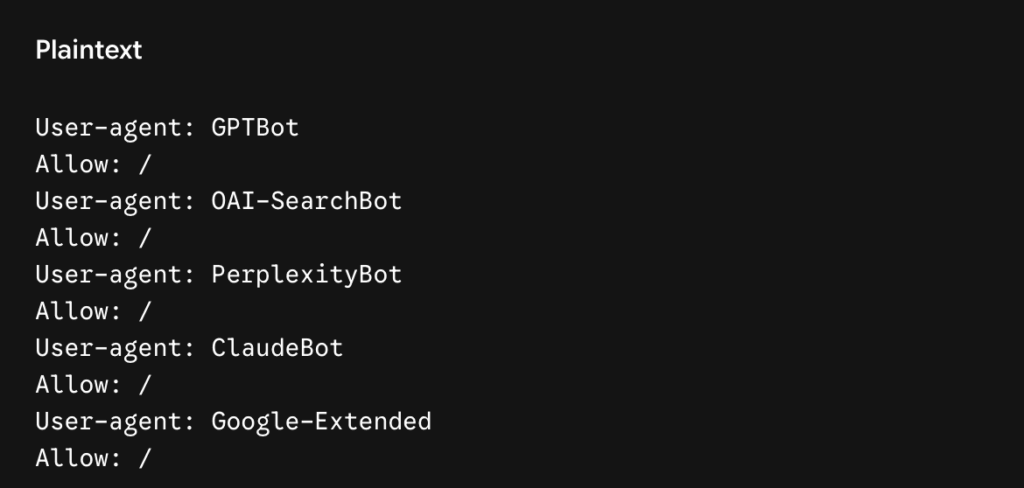
➤ Configure access in robots.txt: allow indexing for specialized crawlers by adding the following block of rules:
➤ Ensure server-side rendering: deliver content as clean HTML. Some crawlers may have limited JavaScript processing capabilities, so important content should preferably be delivered in HTML without requiring heavy scripts to run.
➤ Mark up data using Schema.org: implement structured data types such as Organization, Service, Product, Article, FAQPage, and Person to accurately identify entities.
➤ Add an llms.txt file: add the llms.txt file, proposed as a way to provide structured information to LLMs.
➤ Optimize response speed (TTFB): AI crawler timeouts are significantly shorter than those of standard Google bots. The server should return the page code in under 200 ms.
➤ Create a clear structure: use SEO-friendly URLs, logical directory nesting, and valid breadcrumbs.
➤ Establish trust signals: add author information blocks to pages (Person type) and transparent content creation or update dates.
Properly implemented technical optimization allows AI bots to instantly read key information without data loss.
Website Optimization for AI Systems: Content Requirements
Effective website optimization for AI systems requires a change in the approach to content creation. Generative systems process structured, clear, and verifiable information more effectively.
➤ Direct answer principle: at the beginning of each section, provide a direct and informative answer to the question in the heading. ➤ Chunking (standalone blocks): divide the text into logical sections. Each passage under an H2/H3 heading should retain its meaning when extracted and cited without the context of the entire article. ➤ Tables and bulleted lists: AI models prioritize structured data when generating comparative answers. ➤ Verifiable facts and figures: include precise data with links to research — this can increase the likelihood of the information being used and cited. ➤ Concise language: avoid complex metaphors and clichés. Write simple sentences with clear subject-object relationships. ➤ Data updates: regularly update figures, dates, and service terms. Outdated information quickly disappears from generative answers.
Content created according to these principles becomes ready-made “building material” for generating responses in LLMs.
Website Promotion in AI Beyond Your Website
A significant portion of brand information may come from external web sources, so a company's absence from the digital environment can make it invisible to AI systems. Authority for AI algorithms is built through expert columns in the media, directory listings, and reviews on platforms such as Trustpilot or Google Business Profile.
Being included in Wikidata, maintaining activity on Q&A platforms, and publishing YouTube videos with text transcripts create a clear semantic footprint for the brand. For LLM algorithms, any mention of a company in an expert context can be highly valuable even without a direct link.
How to Check Whether AI Mentions Your Brand
Measuring the effectiveness of promotion in generative systems requires regular testing sessions and proper web analytics configuration.
➤ Build a prompt set: collect 20–30 target questions that potential customers ask AI platforms when searching for your services. ➤ Run tests: submit the prompts to ChatGPT, Perplexity, Gemini, and Google AI Overview in incognito mode. ➤ Record the results: note the brand's presence in the response, its position in the recommendation list, and the primary sources cited by the AI. ➤ Conduct multiple rounds of checks: repeat the measurements 2–3 times on different days, as language model responses may vary. ➤ Set up GA4 tracking: create a separate segment for referral traffic from chatgpt.com, perplexity.ai, gemini.google.com, and claude.ai. ➤ Monitor monthly: compare changes in AI visibility with the number of incoming conversions involving AI sources.
A systematic audit helps identify content gaps in time and adjust off-site website promotion in AI search.
Common Mistakes
AI search promotion is a relatively new field, and companies often make the following typical mistakes:
➤ Blocking bots in robots.txt. Using default hosting settings that restrict access for GPTBot or PerplexityBot. ➤ Focusing on a single platform. Trying to optimize a website exclusively for ChatGPT while ignoring Google AI Overview and Perplexity. ➤ Low-quality AI-generated content. Filling a website with generic AI text that lacks expertise, facts, and E-E-A-T-related signals. ➤ Abandoning traditional SEO. Ignoring basic search engine optimization, causing the website to lose rankings in sources that LLMs rely on. ➤ Unrealistic timeline expectations. Expecting immediate results within 1–2 weeks instead of consistent work over 2–4 months.
Avoiding these mistakes will help you save your budget and establish your website as an authoritative source for AI algorithms more quickly.
FAQ
What is AI search promotion in simple terms?
It is the process of adapting a website and the brand's external presence so that ChatGPT, Perplexity, and Google AI Overview recommend your company in responses to users.
How is AI optimization different from traditional SEO?
Traditional SEO competes for web-page positions in a list of links, while AI optimization aims to get the brand and its facts included directly in AI-generated text.
Does a small business need AI website optimization?
Yes. Small businesses can successfully compete with larger companies by maintaining a clear structure, providing expert information, and thoroughly covering specific niche topics.
How quickly will results appear?
The timing of the first changes depends on how frequently sources are updated, their authority, the subject matter, and the specifics of each AI system. Therefore, GEO results are best evaluated dynamically rather than against a fixed timeframe.
Is it possible to promote a business in AI without a website?
No, because models validate company information by comparing external mentions with data from its official primary source.